
Japa Mala Guide: How to Wear, Use and Count With It Correctly
Japa Mala Guide: How to Wear, Use and Count With It Correctly
If you have ever picked up a mala for the first time, you have probably had a few small but real questions. Is it okay to wear mala beads around your neck like jewelry? Which hand should hold it? What happens when you reach the last bead? Can you use a phone counter alongside it without it feeling disrespectful?
These questions matter because a mala is not a fashion accessory. It is a tool for naam jap, and using it the right way helps your practice rather than distracting from it.
This guide answers all of these questions clearly, based on traditional practice that has been followed for centuries, alongside practical guidance for anyone starting naam jap today.
What Is a Japa Mala
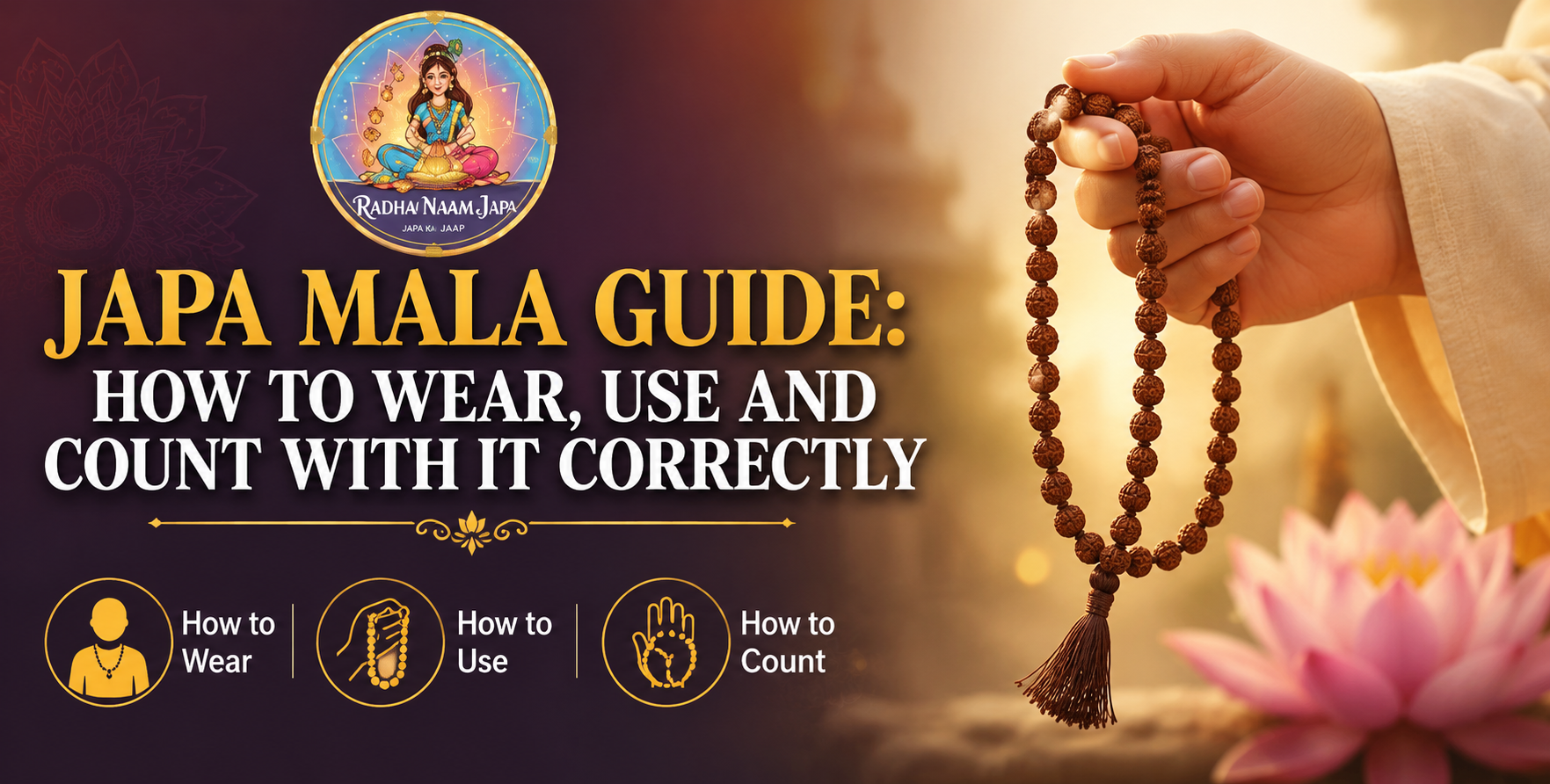
A japa mala is a string of beads, traditionally 108, used to count repetitions of a mantra or divine name during naam jap. Each bead represents one repetition. When you complete all 108 beads, you have completed one full round, often called one mala.
The number 108 itself is considered sacred across multiple traditions. It appears in the number of Upanishads, in astrology, and in the structure of many ancient texts. A mala gives your hands something to do while your mind focuses entirely on the naam, which is why it has remained the most trusted tool for naam jap for thousands of years.
Most malas are made from Tulsi wood, Rudraksha seeds, sandalwood, or sometimes crystal or gemstone beads, depending on the tradition and personal preference.
Is It Disrespectful to Wear Mala Beads as a Necklace
This is one of the most searched questions about malas, and the honest answer depends on how the mala is being worn and what it represents to you.
When Wearing a Mala Is Appropriate
If the mala has been given to you by a guru or spiritual teacher as a blessing, wearing it as a reminder of your practice and devotion is completely appropriate. Many practitioners wear their mala around the neck throughout the day specifically to stay connected to their naam jap practice, not as decoration.
If you wear it with awareness of what it represents, and you treat it with care rather than as a casual fashion piece, this is considered respectful in most traditions.
When It Becomes a Concern
The concern arises when a mala is worn purely as a style accessory, layered with other jewelry, worn into places like clubs or while drinking alcohol, or treated without any awareness of its spiritual purpose. This is where many traditional teachers would say the meaning of the object is lost.
The mala itself does not carry disrespect. The way it is treated does.
A Simple Rule to Follow
If you can answer yes to this question, wearing your mala as a necklace is appropriate: "Am I aware that this object represents my naam jap practice, and am I treating it with the same respect I would give to a place of worship?"
If you are wearing it without that awareness, it may be better to keep it somewhere meaningful, like near your place of practice, rather than around your neck all day.
Can You Wear a Japa Mala on Your Neck While Sleeping or Bathing
Most traditional guidance suggests removing your mala before sleeping, bathing or any activity involving impurity, such as visiting a washroom. This is not about the mala being fragile. It is about maintaining the same respect you would give to any sacred object.
A simple practice many devotees follow is to keep the mala on a clean cloth or small altar at home when it is not being worn or used for jap, rather than leaving it in a pocket or bag.
How to Hold a Japa Mala Correctly
The traditional method follows a few simple steps.
Hold the mala in your right hand. Use your thumb to move each bead toward you, one at a time, while your middle finger supports the mala from below. The index finger is traditionally kept away from the beads, as it is considered the finger of ego in many traditions.
Each time you move a bead, say or mentally repeat the naam once. When you reach the meru, the slightly larger bead that marks the start and end of the mala, do not cross over it. Instead, turn the mala around and begin the next round in the opposite direction.
This small detail, not crossing the meru bead, is one of the most overlooked rules and is considered important because the meru represents the guru bead, a point of reverence rather than another count.
How Many Times Should You Go Around the Mala
One full round of 108 beads counts as one mala of naam jap. How many rounds you do per day depends on your stage of practice.
Beginners typically start with one mala, which is 108 repetitions, once per day. As the practice becomes a stable daily habit, many practitioners move to 5 or more malas per day.
For a complete breakdown of how many naam jap you should aim for at each stage, read our detailed guide: Kitna Naam Jap Karna Chahiye.
Using a Mala Together With a Digital Counter
A common question today is whether using a phone or digital counter alongside a mala defeats the purpose of the mala. It does not, if used correctly.
The mala helps with the physical, tactile rhythm of naam jap and keeps your hands engaged in the practice. A digital counter helps you track your cumulative total across days, weeks, months and years, something a mala alone cannot do unless you are manually recording your rounds elsewhere.
A simple way to combine both: complete one full round of your mala, 108 repetitions, then tap your digital counter once to add 108 to your running total. This way you get the tactile benefit of the mala and the long term tracking benefit of a counter, without losing the meaning of either tool.
You can track your daily and total naam jap using our free online naam jap counter. It works on any mobile browser, requires no signup, and saves your running total automatically.
How to Count 108 Without a Mala
If you do not have a mala available, you can still complete a full count of 108 naam jap using your fingers or a digital counter.
Using your fingers, count each repetition on the joints of your fingers, excluding the thumb, which gives you 12 counting points per hand. Alternatively, simply use a digital counter and set your target to 108. Tap once per naam jap until the counter reaches 108.
Neither method is less valid than using a mala. What matters most in naam jap is consistency and attention, not the specific tool used to count.
Choosing the Right Mala for Your Practice
There is no single correct mala for everyone. The right choice depends on your tradition and personal connection.
Tulsi mala is most commonly used for Krishna and Radha naam jap, as Tulsi is considered deeply connected to Krishna devotion.
Rudraksha mala is traditionally associated with Shiv naam jap and is widely used across many different practices regardless of which naam you are chanting.
Sandalwood mala is a neutral, widely used option suitable for any naam, valued for its calming fragrance during practice.
Whichever mala you choose, what matters far more than the material is your consistency in using it daily.
Frequently Asked Questions About Japa Mala
Is it disrespectful to wear mala beads as a necklace? It is not inherently disrespectful. What matters is the awareness and care with which you wear it. If it is worn as a reminder of your spiritual practice and treated with respect, wearing it is appropriate. If it is worn purely as fashion without any connection to its purpose, many traditions would consider that a loss of its meaning.
Can I wear a japa mala on my neck all day? Yes, many practitioners do this specifically to stay mindful of their naam jap practice throughout the day. It is best to remove it during activities like bathing or sleeping, and to handle it with care rather than treating it as ordinary jewelry.
Which hand should hold the japa mala? Traditionally the right hand is used to hold and move the mala beads during naam jap, with the thumb moving each bead and the middle finger supporting it from below.
What happens when you reach the end of the mala? When you reach the meru, the larger bead marking the start and end point, you do not cross over it. Instead you turn the mala around and begin your next round in the opposite direction.
Can I use a digital counter instead of a mala? Yes. A digital counter works well on its own, or alongside a mala. Many practitioners use the mala for the physical rhythm of naam jap and a digital counter to track their cumulative total over time.
How many beads are in a japa mala? A standard japa mala has 108 beads, plus one additional meru bead that marks the beginning and end, making 109 in total.
Can I count naam jap without a mala? Yes, using your fingers or a digital counter works equally well. The mala is a helpful tool but not the only valid way to keep count during naam jap.
A Final Thought
A mala is a simple object, a string of beads, yet it carries the weight of every repetition you have ever counted on it. Whether you wear it as a daily reminder, keep it on your altar, or use it only during your practice, what matters most is the awareness you bring to it.
Start with one mala today. One round, 108 repetitions, said with attention. That single round is where every long term naam jap practice begins.
Next Steps
Kitna Naam Jap Karna Chahiye, Complete Daily Guide

Get the #1 Naam Jap counter app
Never lose your count, even when your phone locks. Works offline. Track Ram Naam, Radha Naam, or any mantra from 108 to 1 crore.
- ✓Works offline
- ✓Daily Panchang + Gita
- ✓Audiobooks included
- ✓100% ad-free

